

Celebrate Black History Month with us throughout February. We will each week feature a new entry into the spotlight. Learn about great men and women of color who helped shape the nation, pave the way for freedom and made great achievements in the face of difficult circumstances.
Frederick Douglass
Frederick Douglass (c. 1818–1895) was a premier 19th-century abolitionist, orator, author, and reformer who escaped slavery in Maryland to become a leading voice for human rights. His autobiographies and newspapers, such as The North Star, transformed public opinion against slavery, advocating for constitutional equality, education, and women's suffrage. Life and Accomplishments
- Escape and Early Life: Born into slavery in Maryland, Douglass secretly learned to read and write. He escaped at age 20, disguised as a sailor, and settled in Massachusetts.
- Abolitionist Leader: His eloquence and personal narrative, particularly Narrative of the Life of Frederick Douglass, an American Slave (1845), proved that formerly enslaved people were intellectual equals.
- Activism: He toured internationally, edited newspapers in Rochester, N.Y., and broke with radical abolitionists to argue that the U.S. Constitution could be used as an antislavery document.
- Civil War and Beyond: He served as a consultant to President Lincoln, pushing for emancipation and the enlistment of Black soldiers. Later, he advocated for the 13th, 14th, and 15th Amendments and served in government positions, including U.S. Marshal and minister to Haiti.
Legacy
- Civil Rights Pioneer: Regarded as the "Father of the Civil Rights Movement," Douglass's work bridged the fight against slavery with the struggle for equality, directly impacting the path to emancipation and reconstruction.
- Intellectual Influence: As an author, orator, and the most photographed American of the 19th century, he challenged racist ideologies and shaped American political thought.
- Enduring Impact: He is remembered for fighting for a more inclusive, democratic America and for his unwavering belief in the potential of, and necessity for, equality.

Hiram R. Revels
Hiram R. Revels (1827–1901) was an American clergyman, educator, and Republican politician who made history as the first African American to serve in the U.S. Senate (1870–1871), representing Mississippi during Reconstruction. Born free in North Carolina, he was a minister, Union army chaplain, and educator before entering politics, later becoming the first president of Alcorn University. Key Life Details
- Early Life & Education: Born in Fayetteville, NC, to free parents on September 27, 1827, he attended schools in Indiana and Ohio, and graduated from Knox College in Illinois.
- Ministry & War Service: Ordained in the African Methodist Episcopal (AME) Church in 1845, he served as a pastor in several states. During the Civil War, he helped organize Black regiments for the Union army in Maryland and served as a chaplain at the Battle of Vicksburg.
- Political Career: Settling in Mississippi, he was elected to the state senate before being chosen by the Mississippi legislature to fill a vacant U.S. Senate seat, serving from February 1870 to March 1871. He was a moderate who opposed segregation but supported amnesty for former Confederates.
- Post-Senate Life: He resigned from the Senate to become the first president of Alcorn Agricultural and Mechanical College (now Alcorn State University).
- Death: He died in Aberdeen, Mississippi, on January 16, 1901, following a stroke while attending a church conference.

Hiram R. Revels
The Red Tails
The "Red Tails" were the pioneering African American military pilots of the 332nd Fighter Group and the 99th Fighter Squadron of the United States Army Air Forces (USAAF) during World War II. They were part of the broader Tuskegee Airmen program, which included nearly 1,000 pilots and thousands of support personnel trained at Tuskegee Army Air Field in Alabama.
They earned the nickname "Red Tails" (or "Red-Tail Angels" by bomber crews) because they painted the tails of their P-47 and later P-51 Mustang fighter aircraft a bright, distinctive red to identify themselves in the skies over Europe.

The Red Tails
Shirley Chisholm
Shirley Chisholm (1924–2005) was an American politician, educator, and author who made history as the first African American woman elected to Congress (1968) and the first Black candidate to seek a major party's presidential nomination (1972). Known as "Fighting Shirley" and "Unbought and Unbossed," she advocated for education, women’s rights, and social justice throughout her seven terms representing New York's 12th District. Key Details of Her Life:
- Early Life & Education: Born in Brooklyn to Caribbean immigrant parents, she spent part of her childhood in Barbados before returning to NYC. She earned a master's degree from Columbia University in early childhood education.
- Political Career: Before Congress, she worked in early education and served in the New York State Assembly (1964).
- Congresswoman (1969–1983): Elected in 1968, she focused on improving conditions for low-income residents, advocated for the Equal Rights Amendment (ERA), and founded the Congressional Black Caucus (1971).
- Presidential Run (1972): She ran for the Democratic nomination, running as a candidate for the people rather than just special interests, ultimately securing 152 delegate votes.
- Legacy: After retiring from Congress in 1983, she taught at Mount Holyoke College. She is remembered as a "catalyst for change" who challenged racial and gender barriers in American politics.
Harriet Tubman
Harriet Tubman (c. 1822–1913) was an American abolitionist and former enslaved woman who became the most renowned "conductor" on the Underground Railroad, guiding approximately 70 enslaved people to freedom. Known as "Moses," she risked her life returning to Maryland 13 times to rescue family and friends. During the Civil War, she served as a nurse, scout, and spy, becoming the first woman to lead an armed assault during the Combahee River Raid. Key
Aspects of Her Life:
- Early Life & Escape: Born Araminta Ross into slavery in Dorchester County, Maryland, she escaped in 1849 to Philadelphia.
- Underground Railroad: After her own escape, she dedicated her life to helping others, creating a network of safe houses to move refugees North.
- Civil War Service: Working for the Union Army in South Carolina, she used her skills as a nurse and scout to aid escaping slaves and gather intelligence, leading to the liberation of over 700 enslaved people in the 1863 Combahee River Raid.
- Later Years: She settled in Auburn, New York, where she was a philanthropist supporting the aged and poor, and a vocal advocate for women’s suffrage.
- Legacy: Tubman died in 1913, having lived a life defined by her commitment to freedom, equality, and service to others.
Harriet Tubman
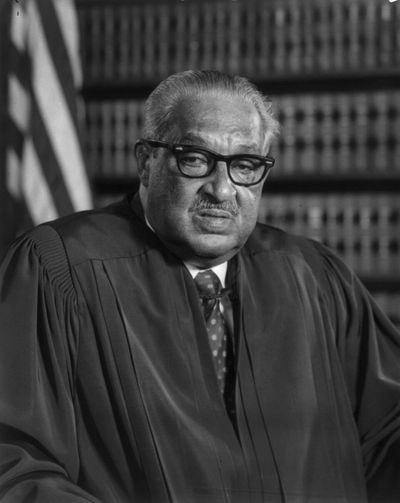
Thurgood Marshall
Thurgood Marshall (1908–1993) was a trailblazing civil rights attorney and the first African American Supreme Court Justice, renowned for dismantling legal segregation. As NAACP chief counsel, he won 29 of 32 Supreme Court cases, most notably Brown v. Board of Education (1954), which ended "separate but equal" schools.
- Early Life & Education: Born in Baltimore, MD, Marshall developed a passion for the Constitution in high school. He graduated from Lincoln University and first in his class at Howard University School of Law, mentored by Charles Houston.
- "Mr. Civil Rights": As NAACP counsel, he traveled the South defending wrongfully accused Black individuals, often risking his life to challenge discriminatory laws.
- Legal Achievements: He successfully argued landmark cases including Brown v. Board of Education and Murray v. Maryland.
- Government Service: Appointed U.S. Solicitor General by Lyndon B. Johnson in 1965, he won 14 of 19 cases, including Miranda v. Arizona.
- Supreme Court Tenure: As an Associate Justice (1967–1991), he was a key figure in the liberal majority, strongly advocating for civil rights, affirmative action, and defending individual rights.
Marshall's career focused on using the law to create a more equitable society, transitioning from an activist lawyer to a key architect of American civil rights law.
.jpg/:/cr=t:15.25%25,l:0%25,w:100%25,h:34.84%25/rs=w:886,h:403,cg:true)
Open Church Event
Oct 31st, 5-7 PM
✨ HALLELUJAH NIGHT ✨
Come dressed in biblical costumes and stop by for candy! We’ll have a costume contest — winner gets a $25 Amazon gift card!
215 Joyner Ave, Nashville, TN 37210